Sights · No. 06
The Presidential Palace: six centuries
A Ming mansion, a Qing viceroy's office, a Taiping palace and the seat of the Republic. The most layered historical site in Nanjing.
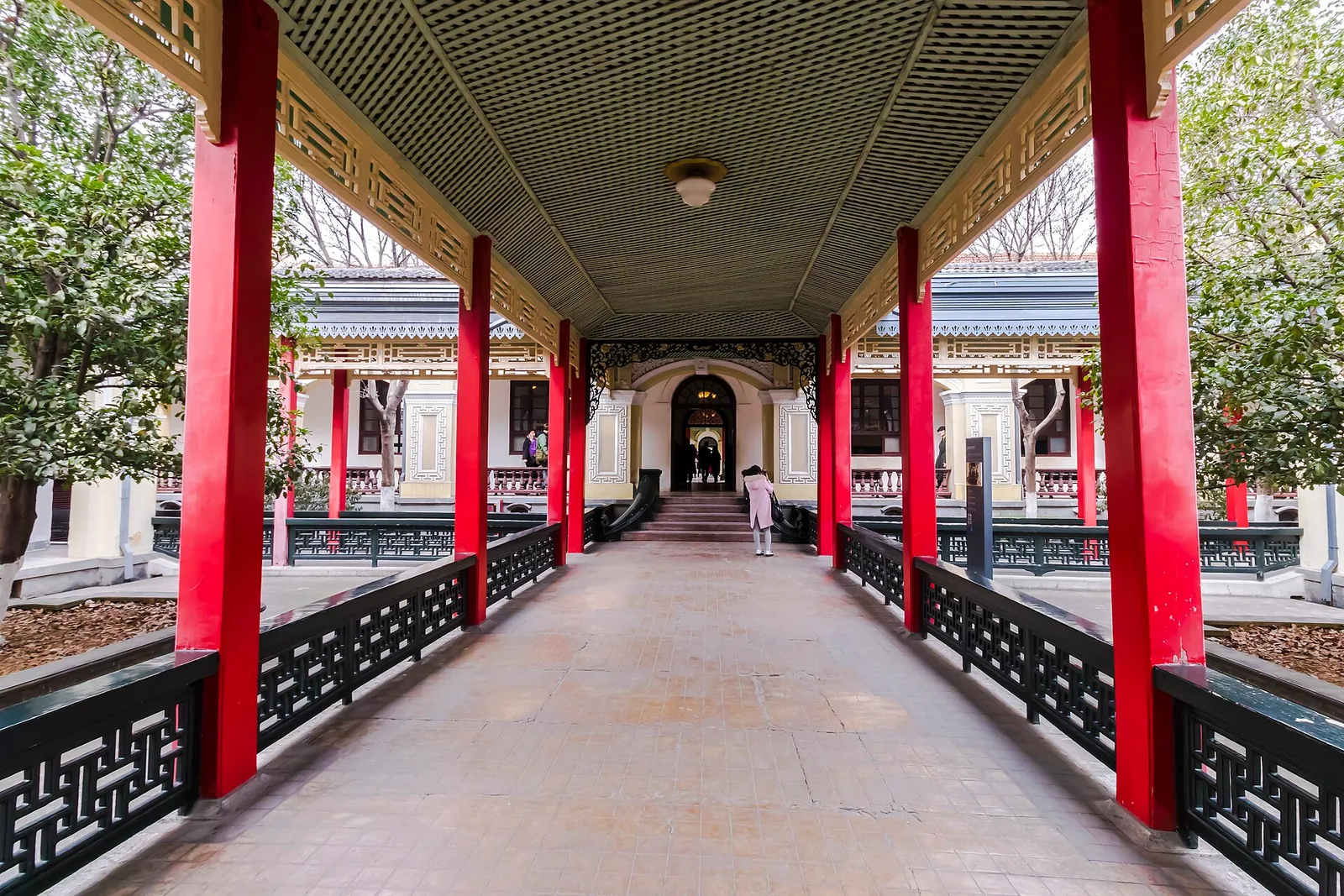
The Presidential Palace is a compound rather than a building: gardens, offices, reception halls and a long colonnade, built and rebuilt over 600 years. It has been a Ming noble's mansion, the office of the Qing viceroy of Liangjiang, the palace of the Taiping Heavenly Kingdom, and the seat of the Republic of China.
The layers
The visit moves through these layers in roughly chronological order. The western garden is the oldest surviving part, with ponds, rockeries and a painted boat house. The central axis holds the Republican-era offices, including the presidential office and reception rooms, preserved with period furniture and documents.
The Taiping section is smaller but striking: the movement's history is told through maps, weapons and reconstructions, with a candour that is unusual in Chinese museums.
What to linger over
The garden. Most visitors rush through the exhibitions and skip the west garden, which is calm, shaded and full of small architectural details. The painted boat, the pavilions and the old trees are worth 30 minutes.
The documents. The Republican-era papers, photographs and telegrams give a granular sense of how the government worked. Look for the English-language signage, which is better than average.
Practicalities
- Tickets are sold at the gate and online. In spring and autumn, the queue can be 45 minutes; buy ahead.
- Closed Mondays.
- The compound is large and mostly outdoors between buildings. In summer, go early.
- There is a café near the exit and decent toilets inside.
The neighbourhood
The palace is in the heart of the old administrative quarter. The Six Dynasties Museum is a five-minute walk away, and the 1912 bar street is just north. Xinjiekou is 15 minutes on foot. This makes it easy to combine with a museum morning and a central lunch.
Is it worth it?
Yes, if you care about modern Chinese history. The palace explains the Republican decade better than any other site in the city, and the garden gives you somewhere to breathe. If you have no interest in the period, the Six Dynasties Museum is a better use of two hours.
The gardens
The western garden is the quietest part of the complex: ponds, rockeries, pavilions and a long covered walkway. Most visitors rush the exhibition halls and skip it, which is a mistake.
Sit by the pond for ten minutes. The garden is a reminder that this was a residence before it was a seat of government, and it is the only part of the site that feels restful.
The west axis
The west side of the complex holds the Sun Yat-sen temporary residence and the offices of the Republican government. The rooms are small, the displays dense, and the English signage patchy.
If you have limited time, choose one axis and do it properly rather than racing through all of them. The east side has the grand halls; the west side has the human detail.
Read next