Sights · No. 03
Zhonghua Gate: the fortress in the wall
The largest surviving gate of the Ming city wall, with four layers of arches, hidden troop chambers and the best short wall walk in Nanjing.
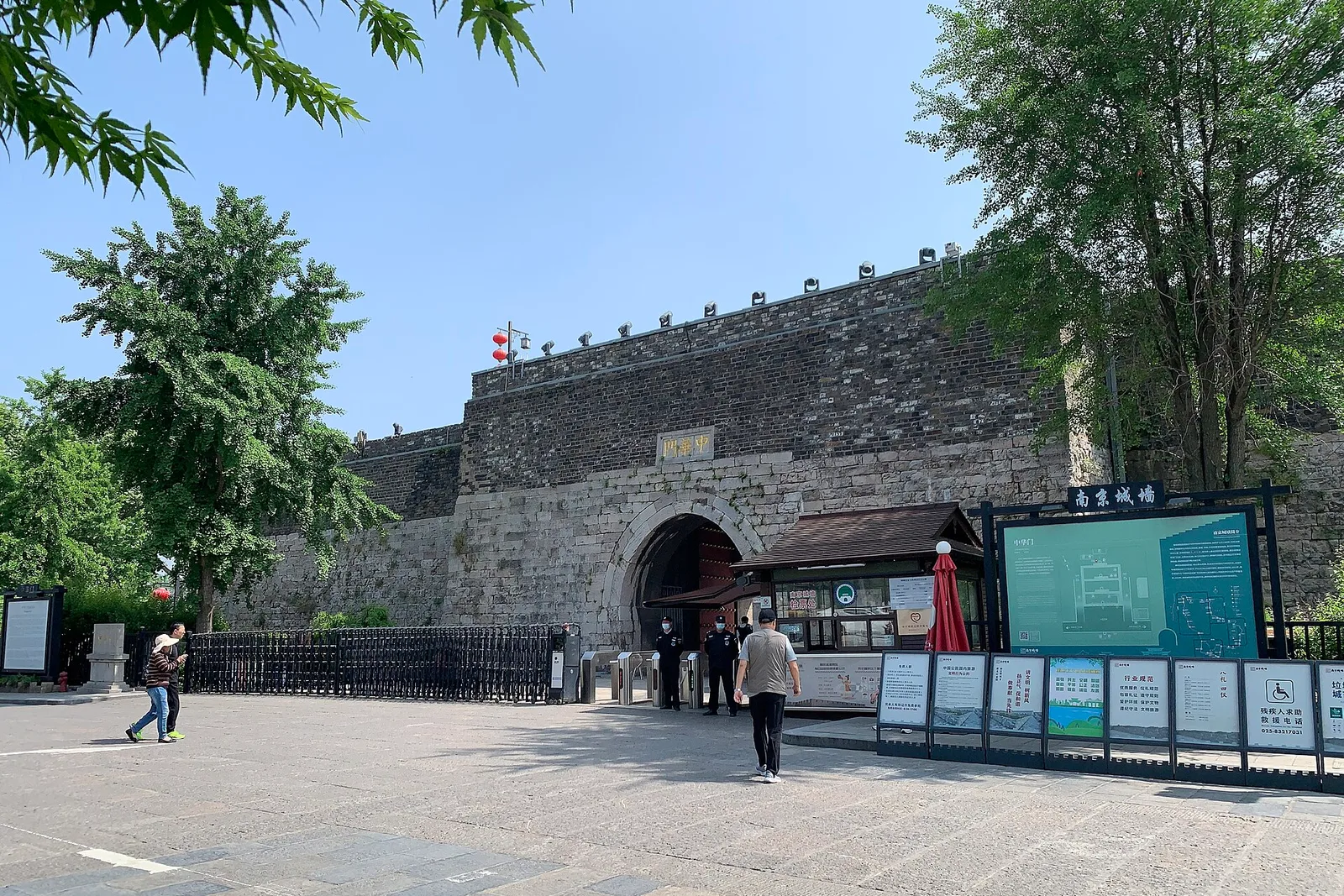
Zhonghua Gate is not a gate so much as a machine for defending a city. Built in the 1360s as the southern entrance to the Ming capital, it has four rows of arched gates, three barbicans and chambers cut into the walls that could hold thousands of soldiers.
What to see
Start at the outer approach, where the scale becomes clear: a massive brick bastion with a sloping face, pierced by a series of tunnels. Walk through the arches in sequence. The interior is cool and dim, with brick vaults and narrow openings that once served as firing positions.
Climb to the top and walk the wall in both directions. East leads toward Dongshuiguan; west gives a view over the old town and the Qinhuai. The top is wide enough for a carriage and completely exposed.
The hidden chambers
The gate's fame rests partly on the chambers built into the barbicans, traditionally said to have housed 3,000 soldiers. They are open to visitors and give a sense of how the wall worked as a military system rather than a decorative boundary.
The wall walk
From Zhonghua Gate, the eastern stretch is the most rewarding short walk in the city. It runs above the rooftops for about four kilometres to Dongshuiguan. Allow two hours with stops.
The City Wall Museum is not on the wall itself: it sits beside the gate, next to Laomendong, and is the best introduction to how the defences worked. Go before you climb.
The surface is uneven brick and stone. Wear shoes with grip, especially after rain.
Practicalities
- Tickets are sold at the gate; a combined ticket covers several wall sections. The City Wall Museum is free with a reservation and closed on Mondays.
- There is little shade on top. In summer, go before 10am or after 5pm.
- The area around the gate is being restored; some lanes are closed without warning.
- Laomendong is a 10-minute walk south-east, good for lunch after the visit.
The view at dusk
The gate faces south, so sunset lights the inner face rather than the outer. The better evening view is from the wall looking north over the old town, with the Qinhuai and the modern skyline layered behind it. Bring a light layer; the wind on top is stronger than at street level.
The barbican
Zhonghua Gate is the largest surviving city gate in China, and the barbican — a walled enclosure in front of the main gate — is the ingenious part. Attackers who breached the outer gate found themselves trapped in a killing ground.
Walk the ramparts and look down into the enclosure. The scale is easier to understand from above, and the interpretation boards explain the defensive logic.
The wall walk from here
The gate is the southern anchor of the Ming wall, and a walk west toward the river or east toward the old town starts here. The eastern section is the more popular; the western section is quieter.
Buy the wall ticket here if you plan to walk. Go early or late — the ramparts are exposed, and midday sun in summer is brutal.
Read next