Sights · No. 16
The Yangtze River Bridge: a modern monument
A 1968 double-deck bridge built without foreign help, and the riverside park that explains why it mattered. Best on a clear afternoon.
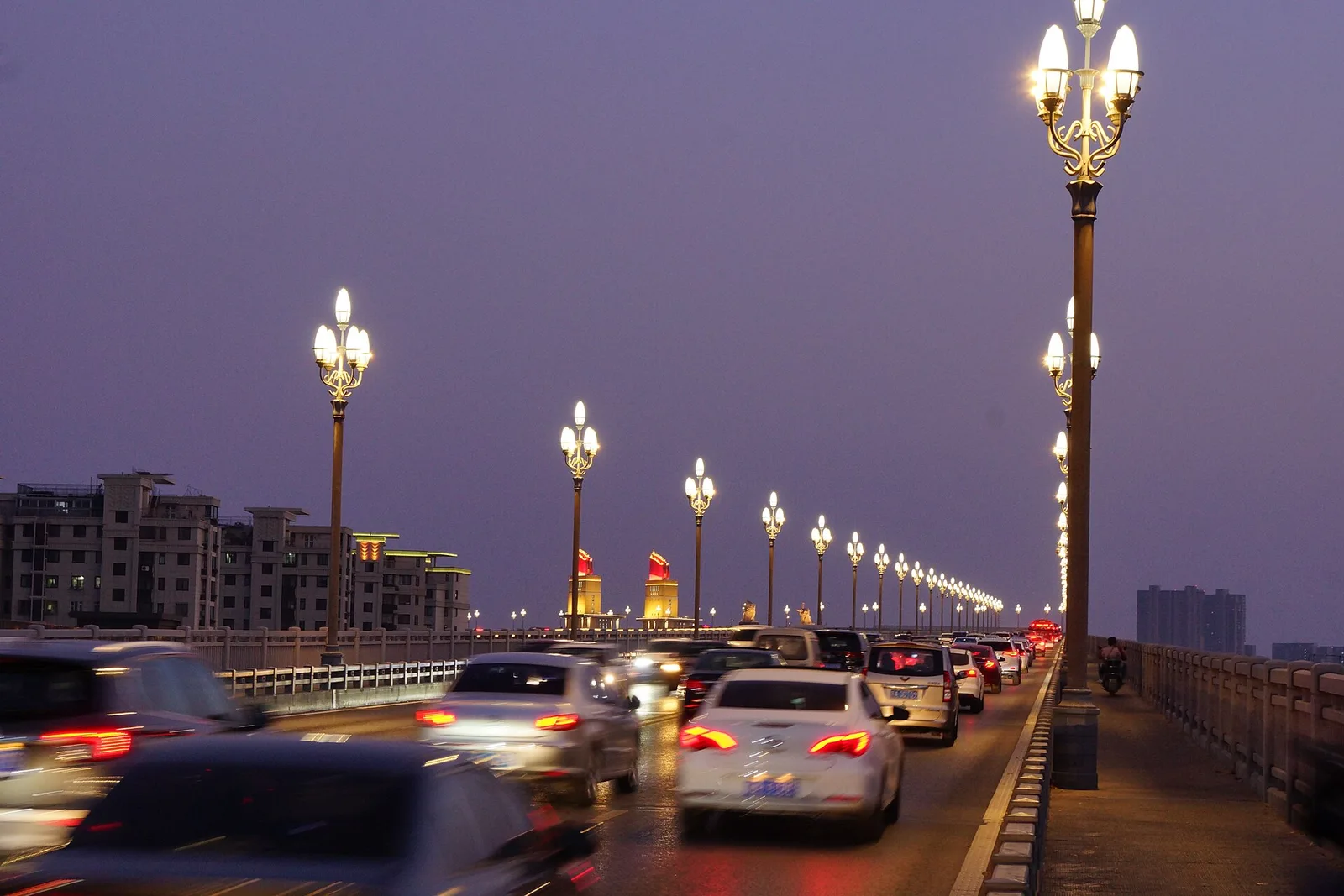
The Nanjing Yangtze River Bridge was completed in 1968, the first double-deck road and rail bridge over the Yangtze designed and built by Chinese engineers. At the time it was a national symbol: a river crossing without foreign assistance, and a piece of infrastructure that connected north and south China.
What to see
The bridge itself is 4.6 kilometres of road deck above a rail deck, carried on piers that rise from the river. The approaches are long, and the walkway, when open, gives a view up and down the Yangtze that makes the city's relationship with the river obvious.
At the southern end, the bridge park has monuments, a memorial hall and a viewing area. The park is a little tired but the scale of the bridge compensates.
The river
The Yangtze at Nanjing is wide, brown and busy with barges. It is not a romantic river in the European sense; it is a working artery. Standing on the bank, watching the traffic, explains more about Nanjing's economy than any museum.
Practicalities
- The bridge is free to cross; the park and memorial hall charge small fees.
- The bridge is north-west of the city centre. A taxi from Xinjiekou takes 25–35 minutes. Metro plus taxi is possible but slower.
- The walkway has been closed for maintenance at times; check before you go.
- There is little shade at the bridge park. Bring water in summer.
- Allow 1–2 hours including the park.
Should you go?
If you are interested in modern Chinese history or engineering, yes. If you are in Nanjing for two days, the travel time makes it a lower priority than the wall and the mountain.
The best version is a late afternoon on a clear day: the bridge silhouetted against the sky, the river traffic, and the city lights coming on as you head back.
Combining it with Pukou
Cross the bridge to Pukou for the old station square and the view back at the city. The area is quiet, a little forgotten, and gives a different perspective on Nanjing. Take a taxi back or catch the metro from a nearby station.
The bridge park
Below the southern end of the bridge is a riverside park with views up at the steel trusses and the river traffic. It is a local place — fishermen, walkers, families — rather than a tourist site.
The bridge itself is best seen from below or from a distance. Up close, the scale is overwhelming and the noise is constant.
Getting there
The bridge is north-west of the city centre, reachable by metro plus a bus or a taxi. The metro station is not close to the bridge, so allow extra time.
Walking across is possible on the pedestrian walkways, but access has been restricted at times and the walk is long and noisy. Check locally before planning to cross on foot; many visitors are content with the park and the view.
Read next