Sights · No. 20
Dabao'en Temple and the glass pagoda
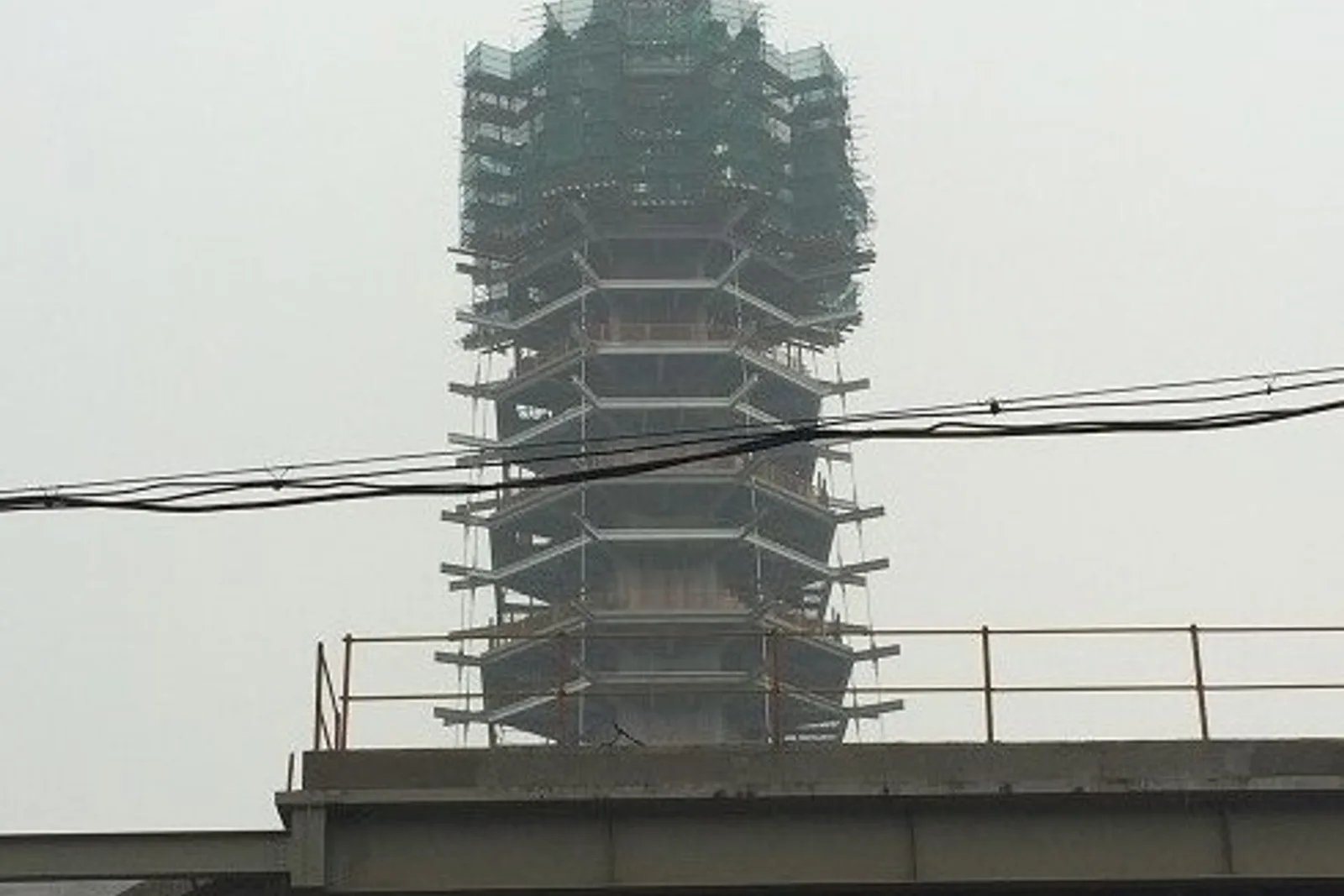
A reconstruction of the Ming Porcelain Tower, now a glass-and-steel pagoda with a museum below. Best at dusk, when it lights up.
The original Dabao'en Temple pagoda was built in the early 15th century by the Yongle Emperor, supposedly in memory of his mother. Covered in glazed white tiles, it was known in Europe as the Porcelain Tower and counted among the wonders of the medieval world. It was destroyed in the 19th century.
The reconstruction
The modern site, opened in 2015, is not a replica. It is a glass and steel pagoda on the original footprint, with a museum below ground that displays the archaeological remains of the old temple, including fragments of the original tiles and a crypt.
The effect is odd and rather beautiful: an ancient form rendered in contemporary materials, glowing at night. Whether it is respectful or kitsch depends on your taste.
What to see
The underground museum is the more substantial part, with excavated foundations, artefacts and a multimedia presentation on the pagoda's history. The pagoda itself has a viewing level and a light show in the evening.
Practicalities
- Tickets are around ¥80, sold online and at the gate.
- Open roughly 9am–8pm; the light show runs after dark.
- Metro Line 1 to Zhonghuamen, then a 15-minute walk along the Qinhuai.
- Allow 1.5–2 hours. The museum is the main content; the pagoda is quick.
- The site is accessible, with lifts.
Is it worth it?
If you like modern architecture or the history of the Porcelain Tower, yes, especially at dusk. If you are choosing between this and the City Wall Museum, the wall museum is cheaper, more informative and more closely tied to the city.
Combining it with the south
The temple is near Zhonghua Gate, Laomendong and the Qinhuai. A good evening is the wall at sunset, Laomendong for dinner, then the pagoda lit up on the walk back. That sequence shows the old city at its best.
The ruins beneath
The modern site is built over the remains of the original monastery, destroyed in the nineteenth century. Glass floors and low lighting expose foundations and reconstructed sections, and the underground hall displays relics recovered from the site.
It is a strange mix of archaeology and spectacle. Some visitors find it moving; others find the presentation overdone. Either way, allow an hour for the underground level — it is the part people remember.
The pagoda at night
The glass pagoda is lit after dark, and the effect is much better than in daylight. If you are nearby in the evening, walk past rather than paying to go up. The reflections in the pool below are the photograph.
The site is a short walk from Zhonghua Gate and Laomendong, which makes it an easy evening add-on rather than a destination in itself.
Read next